
From earning Rs 5 a day as a farm labourer to starting an IT services company that is worth Rs 15 million, Jyoti Reddy's story of success is nothing short of an inspiring movie plot.
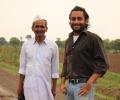
Shuvajit was confident of making a huge difference in the lives of people in rural India.
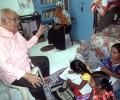
'I've seen the craze for English education even among the poorest. But that is only for their sons. Parents feel thrilled when they see their sons going to school wearing a tie. They don't mind paying for their sons' private tuitions too.' 'But daughters are sent to municipal schools, madarsas, small schools where teachers with no teaching skills are paid Rs 2,000 or Rs 4,000. That's why more girls come to my class.' Syed Feroze Ashraf, who has sent 500-odd girls (and a few boys) -- all first generation learners, children of grave-diggers, hawkers, rickshaw-drivers, tailors and watchmen -- to college, speaks to Jyoti Punwani. A Rediff.com Special.

Jo Jeeta Wohi Sikandar masterfully weaves a compelling human story, says Sukanya Verma.

Naomi Mihara and Ritu Panchal report from Nepal to provide a more humane picture about the conditions on the ground and how the local populace is trying to cope with it.

Iconic rights activist Irom Sharmila on the highs and lows of her long fast, why she gave it up and her plans.

Leave your work at your workstation; don't tag it along everywhere you go!

Nita Doshi and Devashish Sharma share a common goal to help poor patients who cannot afford treatment for cancer.

Paloma Sharma -- the only non-middle aged, non-canine member of the home -- on a Sunday spent at the bank.

'We eat first, they later; we sit on chairs and they on the floor; we call them by their names and they address us by titles,' writes Tripti Lahiri, author of Maid in India.

Vat Vrikshya -- banyan tree in Sanskrit -- helps tribal women, with absolutely zero formal education, set up businesses.

To manage anxious crowds, as many as 3,400 personnel of paramilitary and Delhi Police along with 200 quick reaction teams have been deployed at ATMs and banks.

Ashwini Asokan of Mad Street Den tells women to break stereotypes.

'If fame, money and comfort are the only factors that drive us, then we are playing cricket for entirely the wrong reasons.'
